Role of Emergency Medical Technicians (EMTs) in Modern Healthcare: Responsibilities, Skills & Career Scope
Introduction
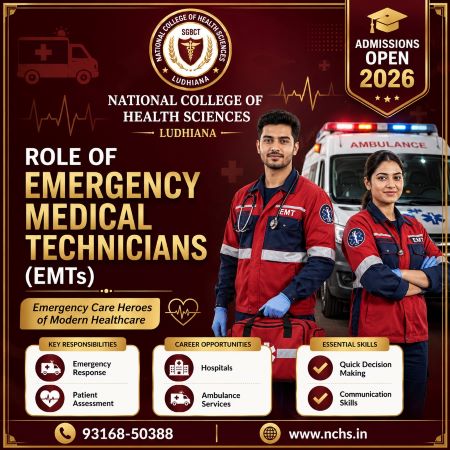
Every minute matters during a medical emergency. Whether it is a road traffic accident, heart attack, stroke, severe injury, respiratory distress, or any other life-threatening condition, the quality and speed of the initial response can significantly influence patient outcomes. Before a patient reaches the emergency department of a hospital, the first healthcare professional they often encounter is an Emergency Medical Technician (EMT).
Emergency Medical Technicians are trained healthcare professionals who provide immediate emergency medical assistance, stabilize patients, and support safe transportation to appropriate healthcare facilities. Working as part of a coordinated emergency response system, EMTs help bridge the gap between the incident scene and definitive hospital care.
With India's healthcare infrastructure expanding and ambulance services becoming more organized, the demand for skilled Emergency Medical Technicians continues to grow. This article explores the important role of EMTs in modern healthcare, their responsibilities, essential skills, career opportunities, and future scope.
Who is an Emergency Medical Technician (EMT)?
An Emergency Medical Technician (EMT) is a trained healthcare professional who provides emergency care before and during patient transportation. EMTs work under established medical protocols and organizational guidelines, helping stabilize patients until they can receive further evaluation and treatment from qualified medical practitioners.
An EMT does not independently diagnose diseases, prescribe medicines, or perform medical procedures beyond the scope of their education, training, workplace responsibilities, and applicable regulations.
Why Are EMTs Important in Modern Healthcare?
Healthcare systems depend on rapid emergency response. In many situations, the first few minutes after an emergency are critical.
EMTs contribute by:
• Providing timely emergency assistance
• Supporting patient stabilization
• Assisting with safe transportation
• Communicating important patient information to hospital teams
• Supporting coordinated emergency response
Their work helps improve continuity of care between the emergency scene and the hospital.
Key Responsibilities of an Emergency Medical Technician
An EMT performs a variety of duties depending on the emergency situation, employer policies, and local protocols.
1. Responding to Emergency Calls
EMTs are trained to respond promptly to emergency calls involving accidents, medical illnesses, trauma, or other urgent situations.
2. Patient Assessment
One of the first responsibilities is to quickly assess the patient's condition by observing:
• Level of consciousness
• Airway status
• Breathing
• Circulation
• Vital signs
• Visible injuries
This initial assessment helps prioritize immediate care.
3. Providing Basic Emergency Care
Depending on their training and workplace protocols, EMTs may provide appropriate emergency support measures while awaiting or transporting the patient for further medical care.
4. Supporting Safe Patient Transportation
EMTs help move patients safely using appropriate lifting techniques and equipment while minimizing the risk of further injury.
5. Monitoring Patient Condition
During transport, EMTs continuously observe the patient's condition and communicate significant changes to the receiving healthcare team.
6. Infection Prevention and Safety
Emergency Medical Technicians follow infection prevention practices by using appropriate protective equipment, maintaining cleanliness, and handling biomedical waste according to established procedures.
7. Documentation
Accurate documentation is an essential part of emergency care.
EMTs record information such as:
• Patient details
• Observations
• Time of response
• Care provided
• Transfer information
Skills Every Emergency Medical Technician Should Have
Technical knowledge alone is not enough. Successful EMTs combine clinical skills with professionalism and effective communication.
Important skills include:
Clinical Skills
• Patient assessment
• Basic first aid
• Vital sign monitoring
• Safe patient handling
• Infection prevention
• Emergency equipment handling
• Ambulance safety procedures
Communication Skills
EMTs regularly communicate with:
• Patients
• Family members
• Doctors
• Nurses
• Ambulance dispatch teams
• Emergency department staff
Clear communication helps improve coordination during emergencies.
Decision-Making Ability
Emergency situations often require quick thinking within established clinical protocols and organizational procedures.
Teamwork
Emergency care depends on collaboration. EMTs work closely with ambulance personnel, nurses, doctors, and other emergency responders to ensure coordinated patient care.
Emotional Stability
Medical emergencies can be stressful. EMTs must remain calm, focused, and professional while supporting patients and their families.
Where Do Emergency Medical Technicians Work?
Qualified EMTs may find opportunities in a variety of healthcare settings, including:
• Multi-speciality Hospitals
• Emergency Departments
• Ambulance Services
• Trauma Centres
• Industrial Medical Units
• Airport Medical Services
• Railway Medical Services
• Event Medical Teams
• Disaster Response Organisations
• Community Health Programmes
Job availability depends on qualifications, experience, employer requirements, and local recruitment policies.
A Typical Day in the Life of an EMT
No two days are exactly the same for an Emergency Medical Technician.
A typical workday may include:
• Checking ambulance equipment
• Inspecting emergency medical supplies
• Responding to emergency calls
• Assessing patients
• Assisting with emergency care
• Transporting patients safely
• Completing documentation
• Preparing the ambulance for the next emergency
This dynamic work environment requires alertness, discipline, and adaptability.
Career Scope of Emergency Medical Technicians
As India's healthcare system continues to develop, trained EMTs are becoming increasingly valuable.
Career opportunities may be available in:
• Public and private hospitals
• Ambulance service providers
• Emergency medical response organizations
• Industrial healthcare services
• Disaster management programmes
• Community healthcare initiatives
With experience and additional education, professionals may advance to supervisory, instructional, or specialized emergency care roles.
Expected Salary
Salary depends on several factors, including:
• Educational qualification
• Experience
• Employer
• City
• Nature of responsibilities
• Additional certifications
Entry-level Emergency Medical Technicians in India commonly earn approximately ₹15,000–₹30,000 per month, while experienced professionals or those working in specialized emergency services may earn higher compensation.
Future Scope of EMT Careers in India
Several trends indicate continued demand for emergency healthcare professionals:
Expansion of Emergency Medical Services
More hospitals and healthcare providers are strengthening emergency response capabilities.
Growing Awareness
People increasingly recognize the importance of timely emergency care and ambulance services.
Urban Development
Rapid urbanization has increased the need for organized emergency medical response systems.
Industrial Growth
Large industries, manufacturing facilities, and infrastructure projects often require emergency healthcare support services.
Disaster Preparedness
Governments and organizations continue to invest in emergency preparedness and disaster response planning.
These developments contribute to positive long-term prospects for trained EMTs.
Professional Qualities of a Successful EMT
Highly respected Emergency Medical Technicians usually demonstrate:
• Compassion
• Integrity
• Discipline
• Responsibility
• Patience
• Professional ethics
• Physical fitness
• Continuous learning
• Respect for patient dignity
• Commitment to quality care
These qualities help build trust with patients, families, and healthcare teams.
Frequently Asked Questions (FAQs)
What is the primary role of an Emergency Medical Technician?
An EMT provides immediate emergency healthcare support, assists in patient stabilization, monitors patient condition, and supports safe transportation to healthcare facilities under established medical protocols.
Can EMTs work in hospitals?
Yes. Depending on qualifications and employer requirements, EMTs may work in hospital emergency departments, ambulance services, trauma centres, industrial medical units, and other healthcare settings.
Is practical training important for EMTs?
Yes. Practical training, simulation exercises, and supervised clinical exposure help students develop essential emergency care skills and confidence.
Is emergency medical technology a good career?
For individuals interested in emergency healthcare, teamwork, and helping people during critical situations, Emergency Medical Technology offers meaningful opportunities for professional development and service.
Conclusion
Emergency Medical Technicians are an indispensable part of modern healthcare systems. Their ability to respond quickly, assess patients, provide timely emergency support, and coordinate with healthcare teams contributes significantly to patient care during critical situations.
As emergency healthcare services continue to expand across India, the role of EMTs is expected to become even more important. Students who are passionate about helping others, enjoy working in dynamic environments, and are committed to continuous learning may find Emergency Medical Technology to be a rewarding career path.
Choosing a quality training institution, gaining practical experience, maintaining professional ethics, and regularly updating clinical knowledge are essential steps toward building a successful career as an Emergency Medical Technician.
Disclaimer
The responsibilities of Emergency Medical Technicians vary according to their education, training, employer policies, applicable laws, and local clinical protocols. Completion of an EMT course does not by itself authorize independent medical practice, guarantee employment, or confer statutory professional registration. Students should verify programme details and applicable regulatory requirements before enrolling in any course.
For More Information.............
National College of Health Sciences
Mobile: +91-92176-03232, +91-93168-50388.
Email: nationalcollegeofhealthscience@gmail.com
24/7 Helpline No. 78726-78726